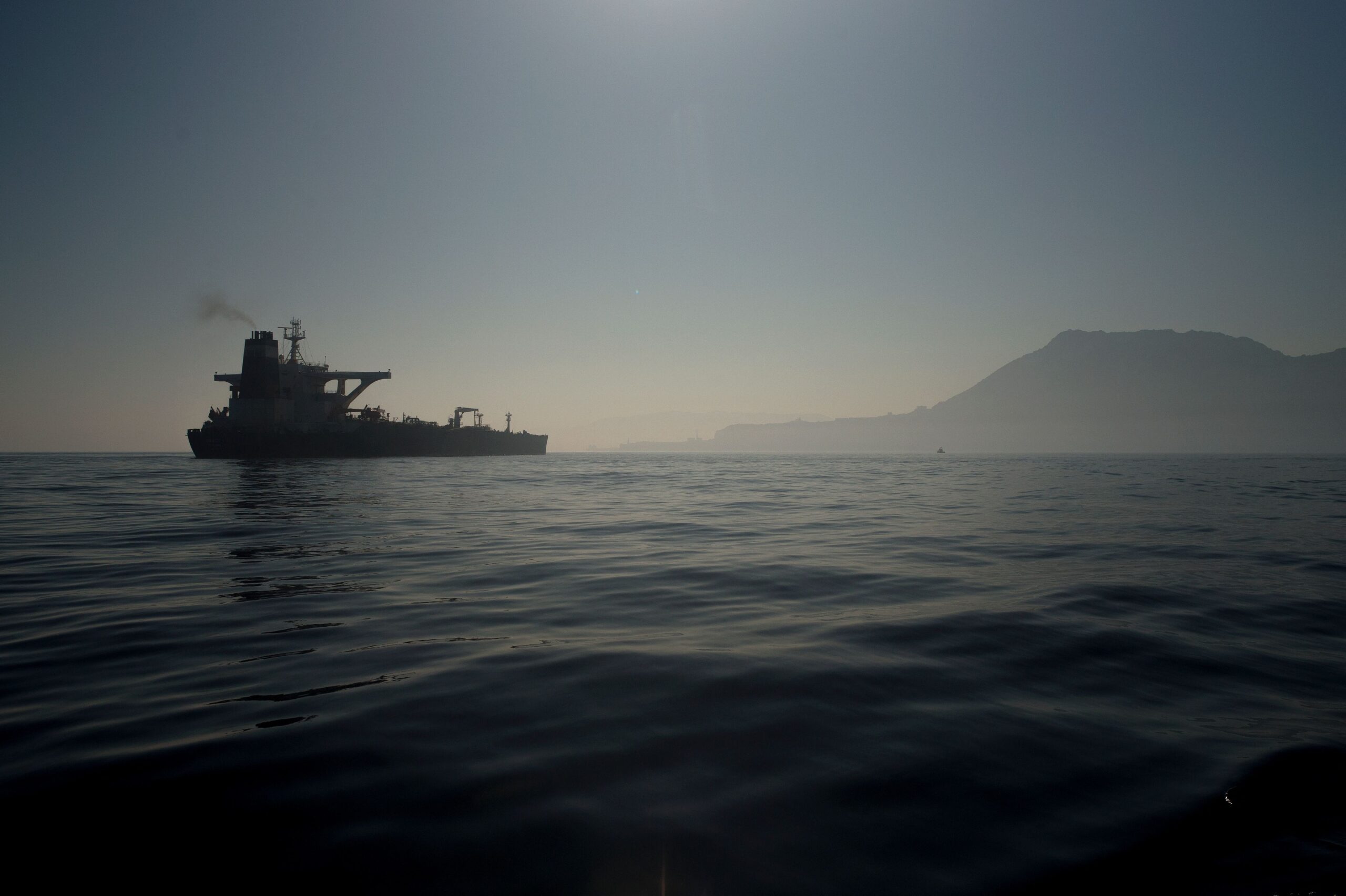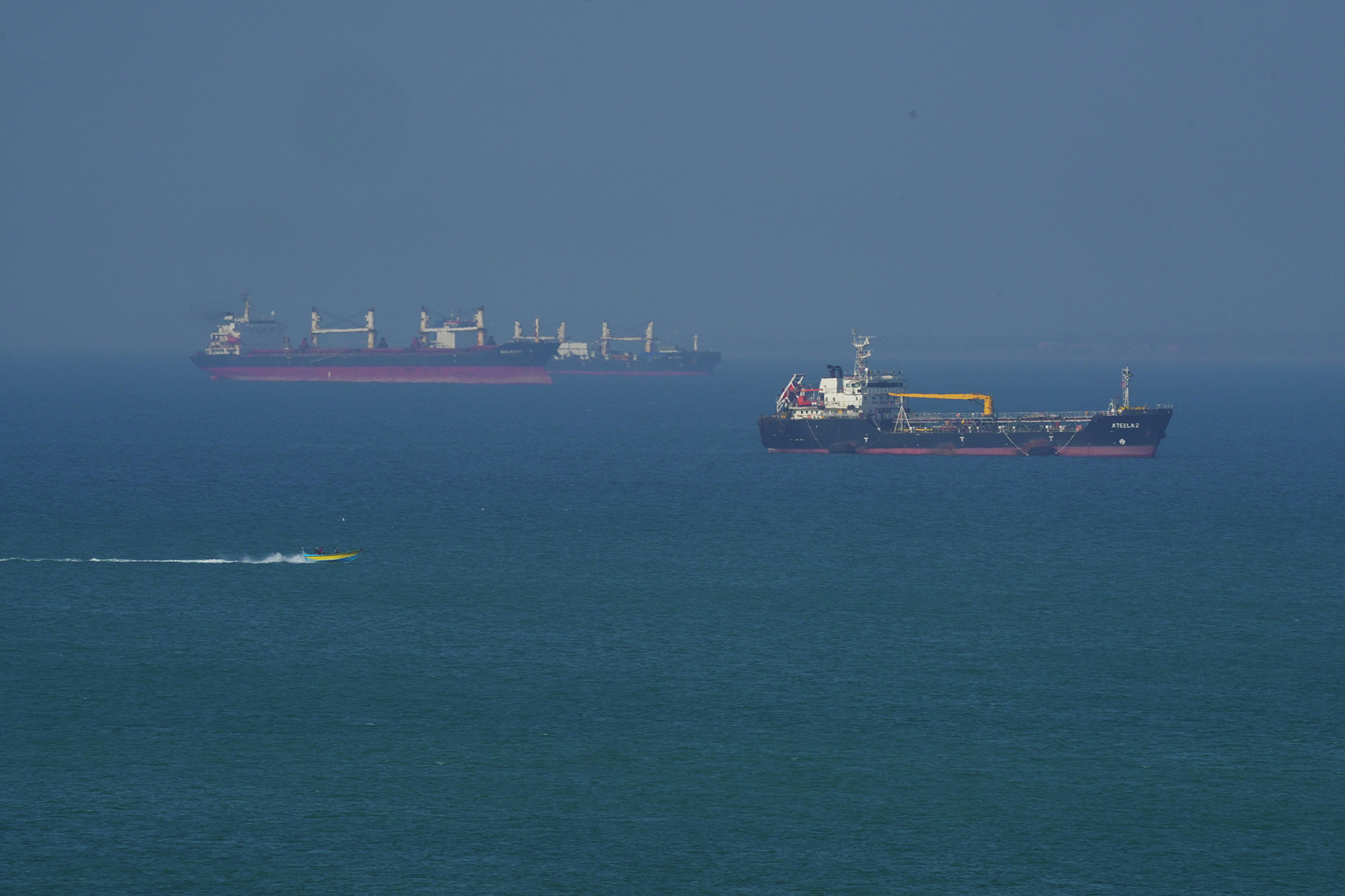
The United States has maintained a blockade of Iranian ports, while Iran has lifted and reimposed a blockade on maritime traffic in the Strait of Hormuz, which normally handles about a fifth of the world’s oil supplies.
Here are some of the non-Iranian oil tankers that have passed through the strait since the outbreak of the U.S.-Israeli war against Iran on February 28, listed by cargo destination, according to data from London Stock Exchange Group (LSEG) and Kpler.
Japan
The very large crude carrier (VLCC) Eneos Endeavor, managed by Japanese refining group Eneos, left the strait on May 14, carrying 1.2 million barrels of Kuwaiti crude oil and 700,000 barrels of Emirates Dass blended oil.
The tanker was loaded in late February and is expected to arrive in Japan on June 3, Kpler said.
The first VLCC to leave is the Idemitsu Maru carrying 2 million barrels of Saudi Arabian oil, which will arrive in Nagoya, Japan on May 25.
United Arab Emirates
VLCC Basrah Energy loaded 2 million barrels of Upper Zakum crude from Abu Dhabi National Oil Company’s (ADNOC) Zirku terminal on May 1, leaving the Strait of Hormuz on May 6, Kpler data showed.
On May 8, the company unloaded cargo at the Fujairah tanker terminal.
In April, the UAE’s Abu Dhabi National Oil Company successfully exported at least 4 million barrels of Upper Zakum crude oil and 2 million barrels of Das crude oil from terminals in the Gulf via four tankers.
Vietnam
Iran’s semi-official news agency Tasnim News Agency stated that a very large oil tanker Agios Fanourios I, fully loaded with Iraqi crude oil and bound for Vietnam, passed through the Strait of Hormuz through Iran’s designated route on May 10.
However, the U.S. Navy has rerouted the tanker as part of its ongoing enforcement of the blockade against Iran.
India
At least two very large tankers and two Suezmax tankers left the Gulf in March and April to offload crude oil in India.
The VLCC Habrut, which crossed the strait on April 2, unloaded Abu Dhabi crude oil for Indian Oil Corporation at Paradip on April 20.
Meanwhile, VLCC Marathi unloaded Saudi crude oil for Reliance Industries at Sikka port on March 28, Kpler data showed.
Data showed that the Suezmax tanker Smyrni left the strait on March 12 and unloaded 1 million barrels of Saudi crude oil for state-owned refiner Hindustan Petroleum Corporation in Mumbai on March 16. Another Suezmax tanker, the Shenlong, left the strait on March 6 and unloaded an equivalent amount of Saudi crude oil in Mumbai on March 11.
Kpler data shows that on April 9, the oil tanker Msg, loaded with residual fuel, passed through the strait and headed for the Pipavav Port in India. Data show that the Navarre oil tanker, which sailed through the strait on March 31, unloaded fuel at Thika Port on April 8.
South Korea
The Liberian-flagged tanker Navig8 Macallister is transporting about 500,000 barrels of UAE naphtha to Ulsan, South Korea.
The Odessa, flying the Maltese flag, passed through the strait on April 13, fully loaded with Middle East crude oil. On May 9, it unloaded cargo for refiner Hyundai Oil Bank at Daesan Port in South Korea.
Thailand
A Thai oil tanker owned by Bangchak Corp BCP.BKOn March 25, a Thai official and the oil giant that owns the ship said that after diplomatic coordination between Thailand and Iran, the ship passed safely through the Strait of Hormuz without having to pay to escape the blockade.
The Liberian-flagged Suezmax tanker Pola unloaded 1 million barrels of Khafji crude in Singapore and Thailand in April, Kpler data showed.
China
VLCC Yuanhua Lake, Data show that the tanker carrying 2 million barrels of Iraqi crude oil left the strait on May 13 and is expected to arrive at the port of Zhoushan in eastern China on June 1.
On April 11, two other VLCCs “Cospearl Lake” and “He Rong Hai” flying the Chinese flag left the Strait of Hormuz.
The Hong Kong-flagged Cospearl Lake, carrying nearly 1.9 million barrels of Iraqi oil, was unloaded in Ningbo on May 2.
On April 22, Herong Hai unloaded 2.1 million barrels of Saudi crude oil in Myanmar. Crude oil unloaded in Myanmar usually flows to PetroChina’s Yunnan refinery.
Both VLCCs are chartered by Unipec, the trading arm of Chinese energy giant Sinopec.
The VLCC Dhalkut, which passed through the strait on April 2, also unloaded 2 million barrels of Saudi crude oil in Myanmar on April 16.
On March 31, a spokesperson for the Chinese Ministry of Foreign Affairs stated that after coordination with relevant parties, three Chinese ships had recently passed through the Strait of Hormuz.
Malaysia
The Liberian-flagged VLCC Serifos sailed out of the strait on April 10. The tanker, carrying crude oil loaded from Saudi Arabia and the United Arab Emirates in early March, was unloaded at the Malaysian port of Malacca on April 30.
The Ocean Thunder, chartered by a subsidiary of Malaysian state energy company Petronas and carrying Iraqi crude, passed through the strait on April 5 and unloaded in Pengerang, Malaysia on April 18, carrying 1 million barrels of Basra heavy crude oil.
Two sources familiar with the matter told Reuters that both tankers were among seven Malaysia-linked vessels approved by Iran to pass through the strait.
(Reporting by Ruth Chai and Florence Tan; Editing by Janane Venkatraman and Mrigank Dhaniwala)
Photo: On April 28, 2026, an oil tanker sailed in the waters near Qeshm Island, Iran, in the Strait of Hormuz; Photo Credit: Asghar Besharati/Getty Images