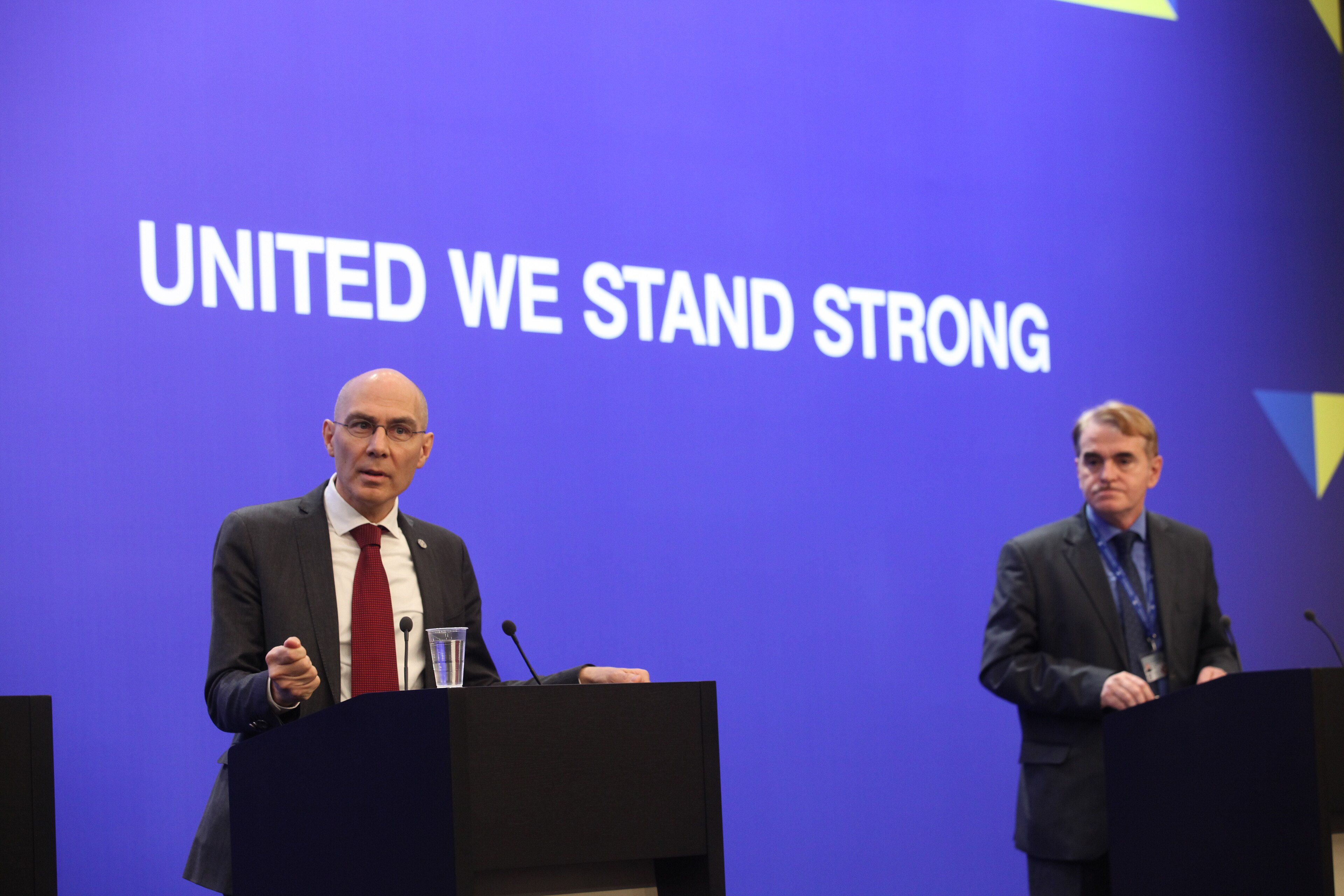
UN human rights chief Volker Türk, on Saturday expressed deep concern on the adoption of the new European Union (EU) regulation allowing the deportation of migrants and asylum seekers. The so-called “Returns regulation“ was originally proposed in March this year and the EU Parliament voted to adopt it on Wednesday.
The new regulation expands the use of detention pending deportation and allows EU countries to set up “repatriation centers” in third countries, provided those third countries respect human rights and international law. The regulations aim to standardize the deportation process of undocumented migrants across the EU.
In a press release, Volker Türk stated:
In this context, EU states cannot simply outsource their human rights obligations to third countries. The detention and repatriation of vulnerable people, including children, to other countries is a particularly sensitive exercise of state power and carries a high risk of human rights violations. The protection and dignity of human rights must be at the forefront everywhere – both in practice and in law
The High Commissioner stressed that robust monitoring and accountability mechanisms are needed to ensure that people’s human rights are protected during the deportation process. In addition, he encouraged public discussion on migration to avoid conflating migration with security concerns.
Human Rights Watch (HRW) criticized the regulations when they were first proposed in March. HRW argued that imposing stricter obligations on migrants does not solve the problem, as the main obstacle to enforcing return decisions is uncooperative countries of origin. HRW is also concerned that the revised detention rules could allow for prolonged detention of migrants, including unaccompanied children. Finally, HRW argued that “repatriation centers” do not ensure safe and sustainable accommodation.
In addition, the EU has taken further measures, creating a stricter and more uniform migration process. The EU is on June 12th Migration and Asylum Pact came into force and introduced stricter regulations aimed at expanding applicant screening, strengthening health and safety controls, speeding up examination processes and offering free consultation services. HRW also criticized this pact, warning that it denies migrants the opportunity to receive a fair hearing. The pact allows EU member states to designate non-EU states as “safe third countries,” which allows the EU state to refuse to examine an asylum application.