According to people familiar with the matter, Oman has told European officials that the Strait of Hormuz cannot be restored to its pre-war status and that some fees may be charged for ships passing through.
While Omani officials say they will always abide by international maritime law, they added that fees may apply for services related to decontaminating the strait or helping ships navigate, said the people, who asked not to be identified discussing private matters. It was unclear whether Oman said all these fees were mandatory.
Oman is analyzing systems for use at chokepoints around the world, including the Strait of Malacca in Asia, where there are no mandatory shipping fees, people familiar with the matter said.
The United States, Europe and Oman’s Gulf Arab neighbors are increasingly concerned that Oman will establish a toll or toll system on the Strait of Hormuz with Iran.
French President Emmanuel Macron will meet Omani leader Sultan Haitham bin Tariq in Paris on Monday as world powers step up efforts to ensure continued free passage through the strait.
Macron’s office said the two leaders would “address the security of sea lanes, which depends on free and unconditional passage through the Strait of Hormuz”.
Oman’s foreign ministry and its embassy in France did not immediately respond to requests for comment on Friday as the country’s weekend began.
A senior U.S. official, who spoke on condition of anonymity to discuss private conversations, said Iran has informed the Trump administration that it will not seek or charge any type of tolls, insurance or fees from ships transiting the strait, reiterating that the U.S. president has said Iran cannot impose charges on the waterway.
Oman and Iran border the narrow waterway, one of the world’s most important transport corridors for oil and liquefied natural gas cargoes.
Starting in late February, when the United States and Israel began bombing the Islamic republic, Iran closed the strait by attacking and threatening ships. Western governments say it may also be mining in parts of the region.
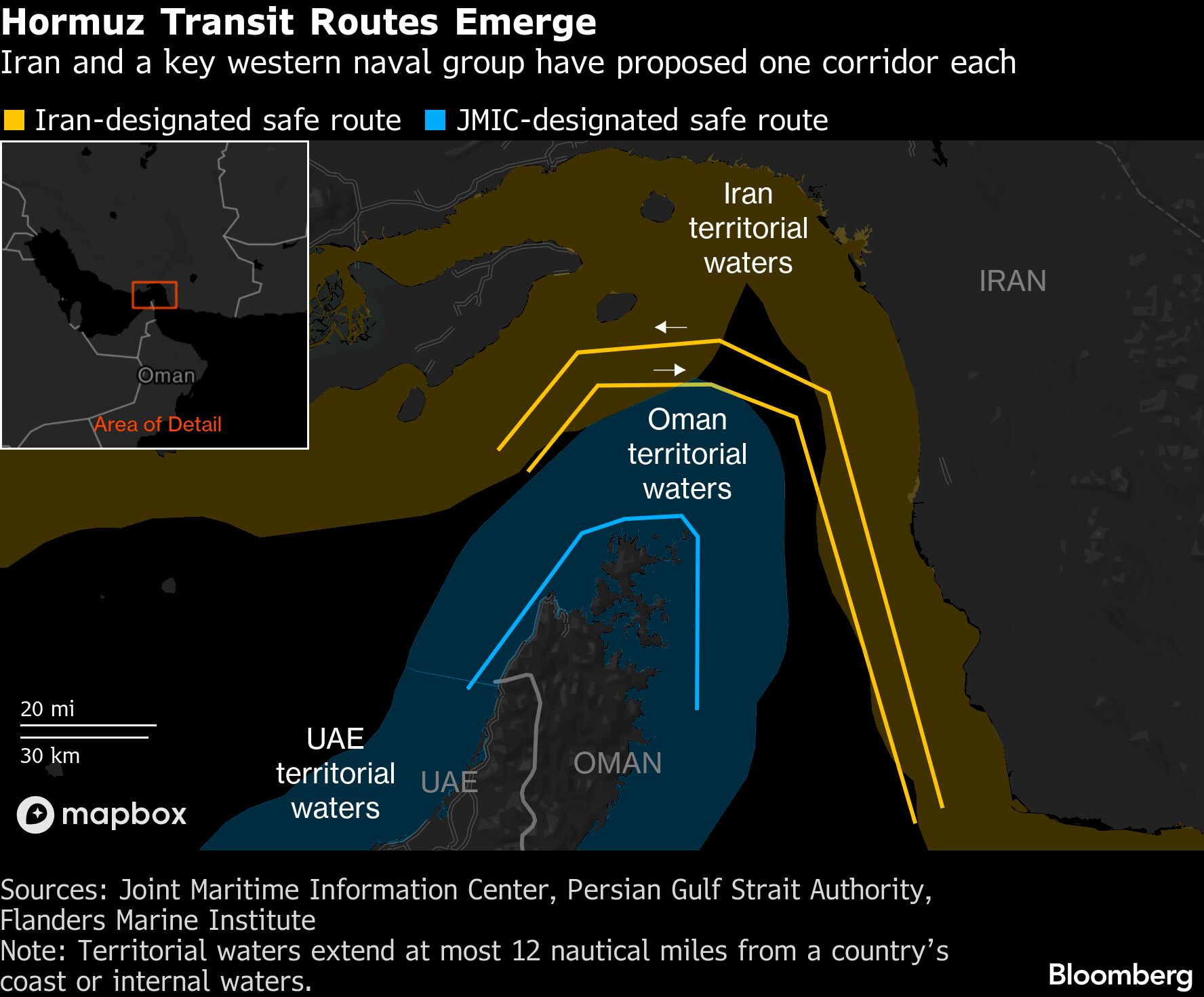
As the United States and Iran engage in peace talks, Tehran insists it will jointly manage traffic with Oman.
Any vessel charges could cost commodity traders and shippers tens of billions of dollars annually. Governments including the United States, Britain, France, Saudi Arabia and the United Arab Emirates have warned they will violate maritime law.
Oman is a U.S. ally but maintains close ties with Iran. It is sometimes called the “Switzerland of the Middle East” for its neutrality in geopolitical conflicts and its role as mediator in the run-up to the war between Washington and Tehran.
Muscat has sent mixed messages about the future of the strait. On Tuesday, it and Iran issued a statement saying they would discuss how to operate the waterway and the costs associated with it. Two days later, it signed a statement from the United States and the Gulf Cooperation Council “rejecting any tolls, fees or attempts to control the strait”.
“They said in the meeting that they signed a statement saying there won’t be any fees or tolls, so I think that’s good news,” U.S. Secretary of State Marco Rubio said of Oman during a visit to Bahrain.
Omani officials told their European counterparts they were facing pressure from Iran. During the conflict, the Islamic Republic has launched missiles and drones across the Middle East, including Oman, and although its armed forces have been damaged by U.S. and Israeli airstrikes, it remains the dominant military power in the Persian Gulf.
“Oman is caught between a rock and a hard place in trying to maintain a balance between Iran and the United States,” said Badr Seif, an assistant professor at Kuwait University and an associate fellow at Chatham House. “It has been more or less effective in the past. But with both sides at war and constantly trying to outwit them, this behavior by Oman will eventually bite them.”
Iran has said that ships passing through the chokepoint will need to apply for insurance from it, adding that insurance will only be free for about the next 60 days.
The issue is a key point of contention between Iran and the United States as they continue to negotiate a permanent peace deal after nearly four months of war. Rubio said Thursday that if Iran wants formal peace, it must keep the strait free and ensure no fees are charged to ships.
Otherwise, he said, there’s nothing to stop governments from doing the same with other maritime chokepoints, “and then we’d be in chaos.”
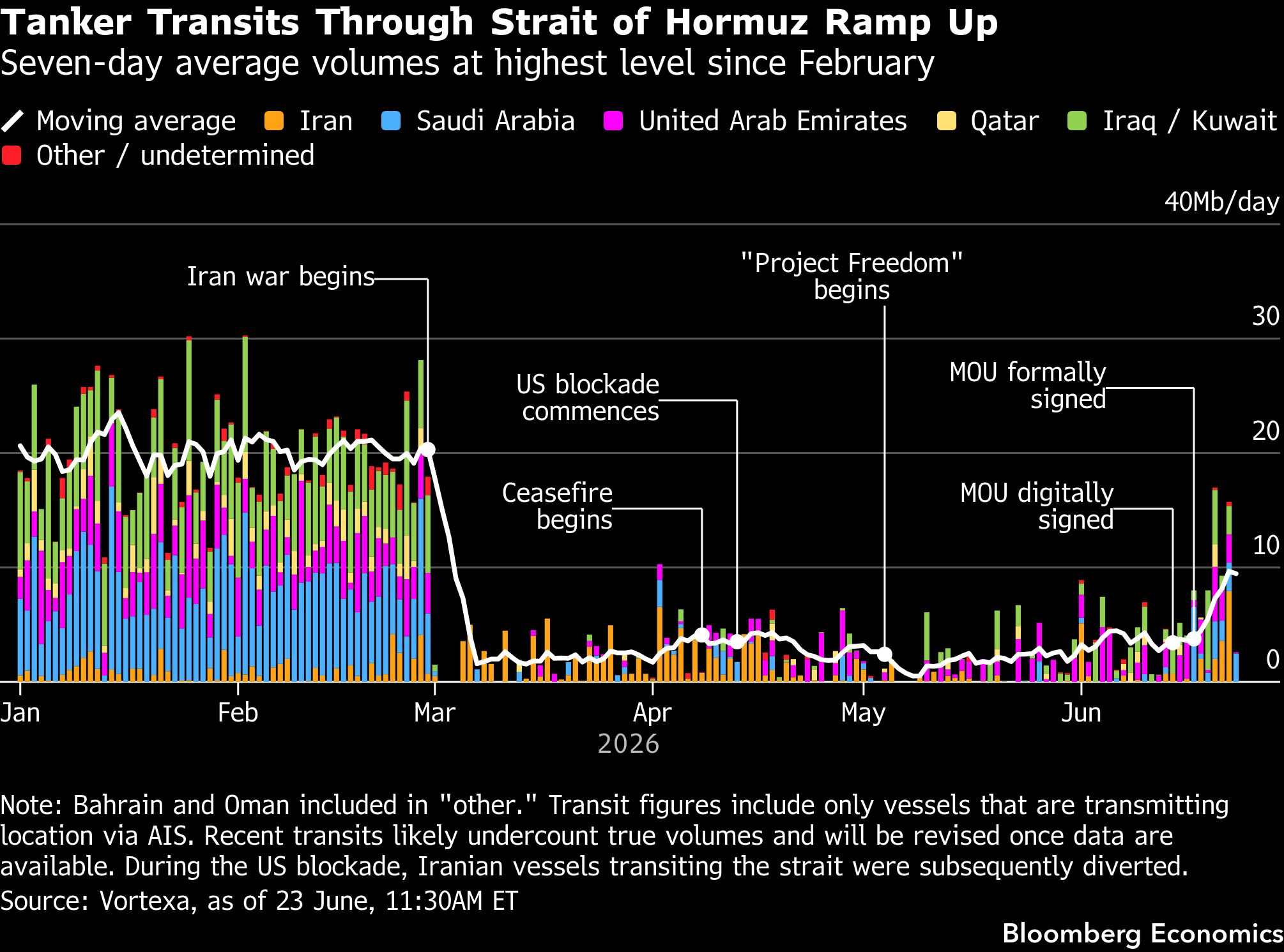
Oil flows through Hormuz have increased since U.S. President Donald Trump signed an interim peace deal with Iran last week, causing crude prices to fall sharply.
Traffic volumes were still well below pre-war levels and ships were still in danger. On Thursday, a container ship named the Ever Lovely was hit in the strait.
Most governments say ships should be allowed to pass through the Strait of Hormuz without paying any fees. This is often the same as other natural chokepoints that border multiple countries. The Malacca Strait between Indonesia, Malaysia and Singapore is loosely regulated, with those countries charging ships for any navigation and safety services they need.
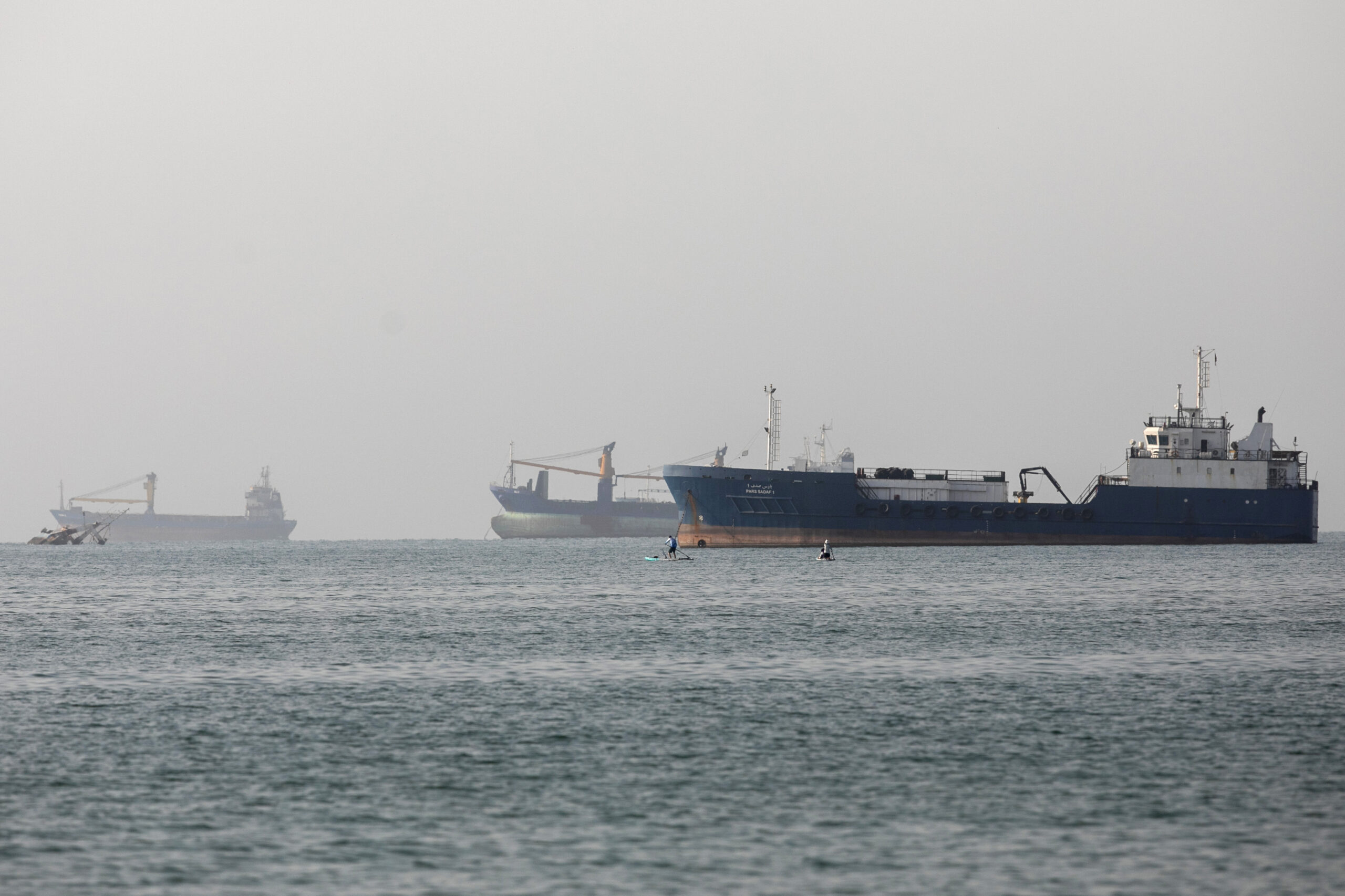
Photo: Ships anchored near Bandar Abbas Port, Iran; Photo Credit: Majid Saeedi/Getty Images
Copyright 2026 Bloomberg.