South Korean lawmakers have passed The “Special Law on Investment in the United States” pledged an investment of $350 billion (about 517 trillion won) on Thursday. Previously President Donald Trump urged In a Truth Social post, he called on the Korean legislature to pass the “historic trade deal” in which he threatened to reinstate South Korean “reciprocal” tariffs, increasing them from 15% to 25%.
At the plenary session of the National Assembly passed the special investment law with 226 yes votes, 8 no votes and 8 abstentions. After the vote, National Assembly Speaker Woo Won-sik said: “I hope this will be a meaningful opportunity to strengthen cooperation between the two countries and reduce customs risks.”
The special draft law establishes the Korea-US Strategic Investment Corporation to implement its $350 billion investment memorandum (MOU) with the United States. The memorandum of understanding requires the company to finance $150 billion for shipbuilding collaborations and $200 billion for U.S. strategic industries. These sectors include semiconductors, pharmaceuticals, critical minerals, energy, AI and quantum computing. The company will directly finance up to $20 billion in investments in the United States each year and provide loan guarantees until a total of $350 billion is reached.
According to Articles 33 to 36 of the bill, the investment company will raise funds from the proceeds of national foreign exchange reserves managed by the Bank of Korea (BOK) and partially owned by the Korean Ministry of Finance and Economic Affairs, as well as from the issuance of international bonds guaranteed by the Korean government.
The new legislation also offers options for investments that lack economic rationality. Article 3(3) allows investments to continue even when profitability is low and economic viability is insufficient, provided there are unavoidable reasons such as national security or supply chain stability. However, the prior approval of the relevant Standing Committee of the National Assembly is mandatory.
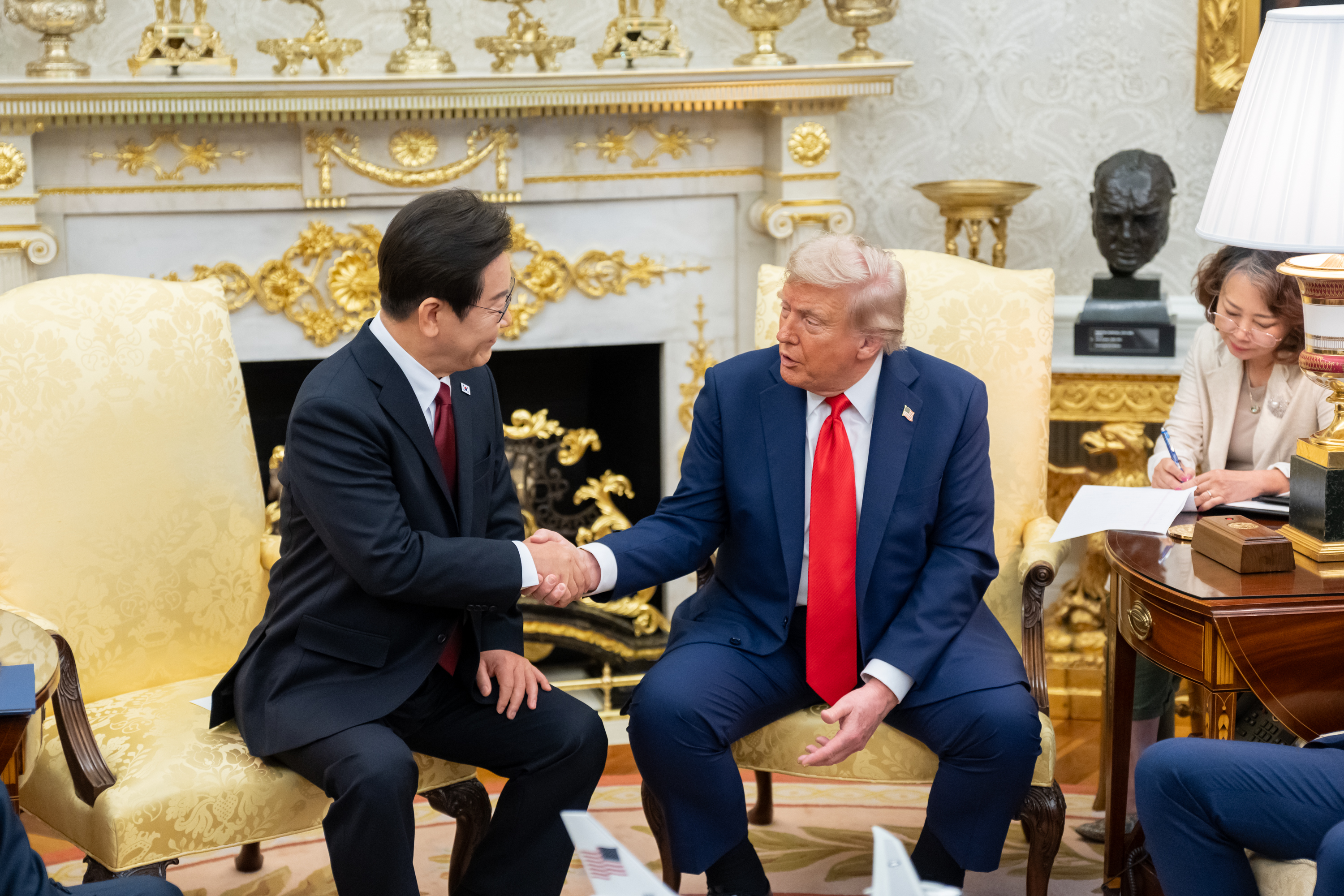
After the law was passed, South Korean Prime Minister Kim Min-seok met with President Trump in the White House. In addition to making investments available, the leaders also reportedly discussed resuming diplomacy with North Korea. Speculation suggests Trump may seek dialogue with North Korean leader Kim Jong-un during an expected visit to China in late March or early April.
Despite the new law, tariff uncertainty remains. The United States recently launched one Investigation under Article 301 of the Commercial Law in 16 jurisdictions including South Korea, China, Japan and the European Union. The US initiated this investigation after the US Supreme Court overturned President Trump’s previous tariff impositions under the International Emergency Economic Powers Act (IEEPA).