The Trump administration is facing new legal challenges to the president’s latest round of global tariffs that took effect Friday.
Small business submitted a a pair of litigation The U.S. Court of International Trade has accused President Donald Trump and U.S. officials of illegally using Section 301 of the 1974 Trade Act to replace tariffs that the U.S. Supreme Court had previously struck down.
The Trump administration announced on July 23 that the United States would impose tariffs of 10% to 12.5% on imported products from most major trading partners. The move under Section 301 follows an investigation into some 60 economies for allegedly failing to prevent forced labor in their supply chains to the detriment of American workers.
Trump aims to rebuild the tariff wall, which was overturned in February when the Supreme Court ruled that global tariffs he imposed under the International Emergency Economic Powers Act (IEEPA) were illegal.
Trump subsequently imposed 10% global tariffs under Section 122 of the Trade Act, which were ruled illegal by a trade court but were allowed to remain in effect pending appeal. Section 122 tariffs are set to expire on Friday.
Section 301 allows the U.S. Trade Representative, at the direction of the president, to impose tariffs on trade measures of other countries that he believes discriminate against U.S. businesses or infringe on U.S. rights under international trade agreements.
Spokespeople for the trade representative, the White House and the Justice Department did not immediately respond to requests for comment.
Lawyers for one of the cases filed Friday on behalf of two small businesses, spice importer Burlap and Barrel Inc. and watch retailer Collective Horology LLC, said in a complaint that the new tariffs fail to reflect the “country-specific investigation” that Congress intended when it passed Section 301. They filed the lawsuit as a proposed class action covering all importers of record who would pay the new tariffs.
“This is not a stand-alone mandate to impose taxes on virtually all imports from nearly all trading partners at rates chosen to replicate the ineffective IEEPA tariff regime,” they wrote.
“Broad assertion”
The businesses argued that the trade representative failed to explain “how each economy’s particular practices burden or restrict U.S. commerce, rather than relying on blanket assertions about the impact of forced labor and forced labor inputs on global supply chains.”
Sara Albrecht, CEO of the Liberty Justice Center, which brought the Burlap & Barrel case, said in a statement that “forced labor is morally indefensible, but important goals do not allow the government to ignore the law.”
The Liberty Justice Center previously filed a lawsuit challenging IEEPA and Section 122 tariffs.
Another lawsuit challenging Section 301 tariffs was filed on Friday on behalf of seven companies, including two educational toy manufacturers — Learning Resources Inc. and hand2mind Inc. — that were involved in an earlier IEEPA tariff lawsuit filed with the Supreme Court.
The latest lawsuit comes as the government continues to face the fallout from IEEPA tariffs. In the months since the Supreme Court invalidated the tariffs, customs authorities have had to deal with refund demands from thousands of businesses that paid about $166 billion in duties.
Refund headache
The ongoing IEEPA refund dispute creates potential logistical and legal headaches for all parties involved in challenging the new Section 301 tariffs (governments, businesses, and the New York Trade Court). The Supreme Court’s ruling comes after the trade court rejected requests from companies to block the government from enforcing IEEPA tariffs, allowing the number of tariffs at issue to grow in size and complexity over several months.
The U.S. government has paid out billions of dollars in IEEPA tariff refunds so far, but the Justice Department is still fighting the scope of the trade court’s authority to decide how the program works. The government is appealing a judge’s order requiring a blanket recalculation of tariffs for all importers who paid them, saying he can only issue orders that apply to all parties in court.
The cases are Burlap and Barrel Inc. v. Greer (26-cv-3345) and Learning Resources Inc. v. United States (26-cv-3347), U.S. Court of International Trade (New York).
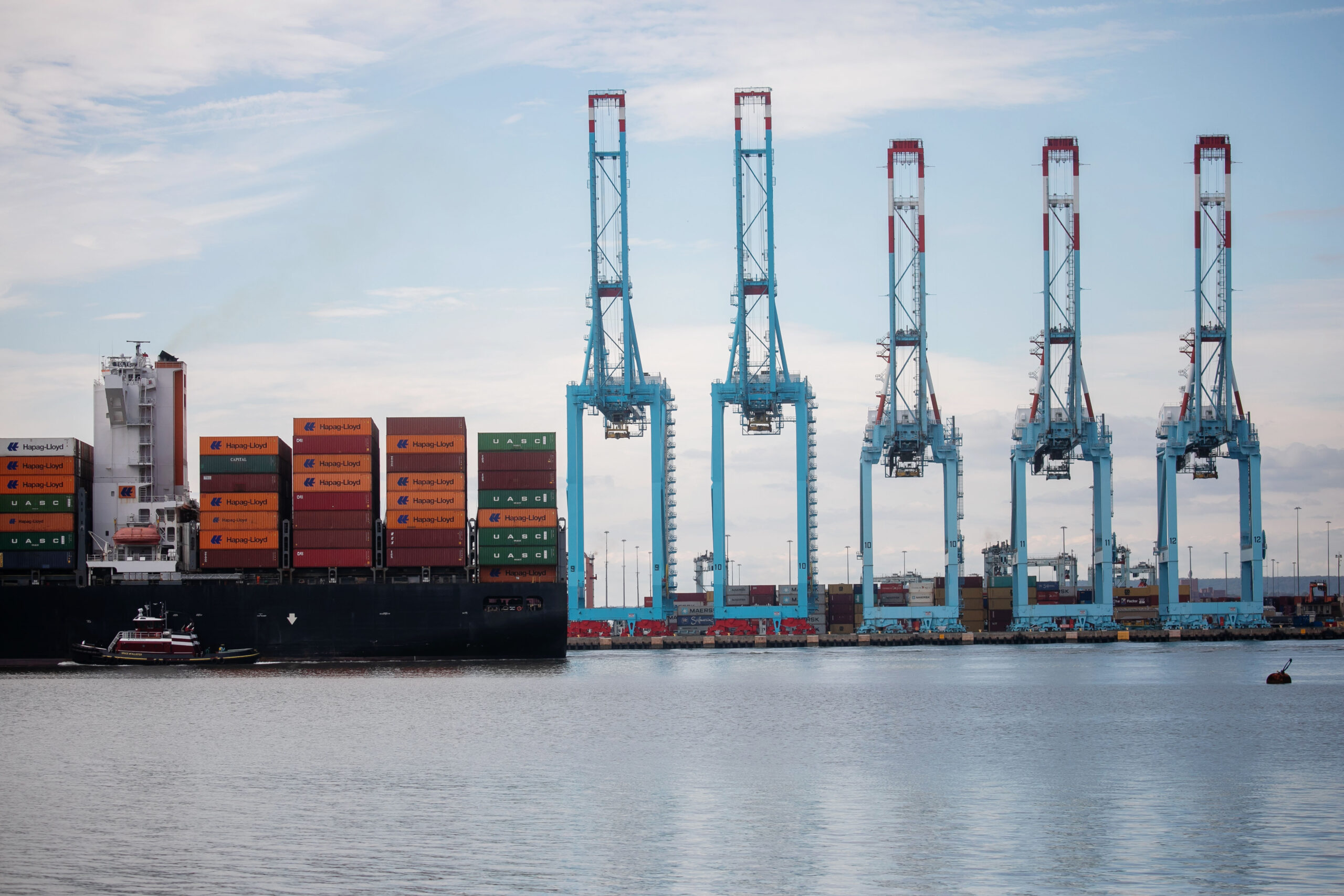
photo: A container ship leaves the Port of Newark in Elizabeth, New Jersey. Photographer: Michael Nagel/Bloomberg
Copyright 2026 Bloomberg.
theme
Litigation Commercial InsuranceCommercial Insurance
interested in commercial insurance?
Get automatic alerts on this topic.