The Strait of Hormuz remains effectively closed to commercial shipping after the United States and Iran clashed overnight near the waterway, attacking each other’s assets in the region.
The U.S. military targeted missile and drone launch sites and other military installations in the Islamic Republic, saying they attacked three U.S. warships transiting the strait.
The clashes threaten to derail negotiations on a U.S.-proposed deal to end the war, and Iran is expected to respond soon. President Donald Trump has renewed his threat to strike harder if Iran rejects his conditions. Tehran responded by saying that the continued hostilities against Iran “underscore the confusion and inability of the U.S. administration to properly understand the situation and find reasonable solutions to get out of the deadlock of their own making.”
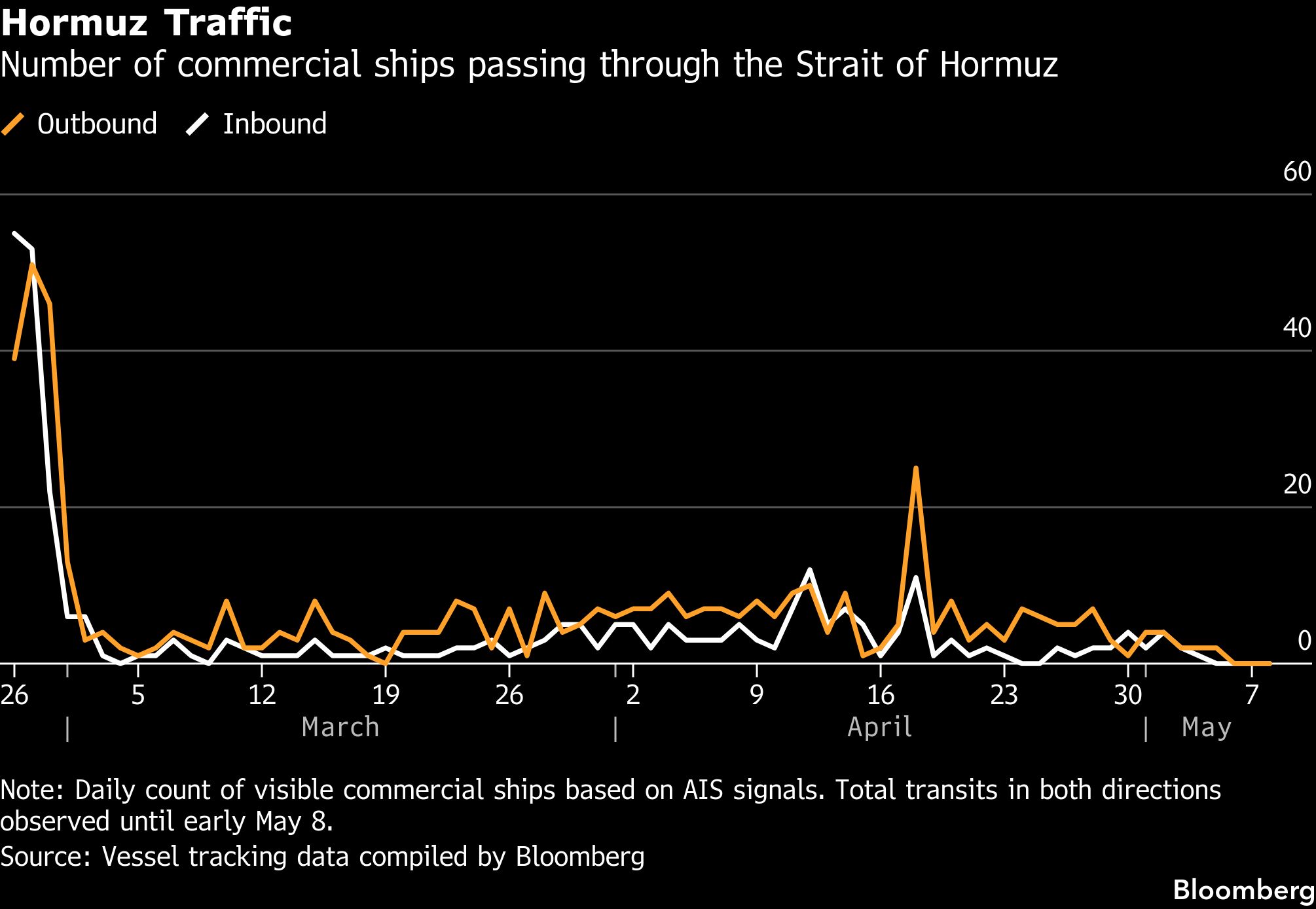
Tehran tightens control of waterways, demands ship owners Submit details – from ship history to cargo value – to the Persian Gulf Straits Authority, adding to uncertainty and hampering navigation. No outbound or inbound transit events have been observed since Tuesday.
An oil products tanker named Star appeared off the coast of Pakistan on Friday morning, heading south and showing its destination as Osaka, Japan, with arrival data for June 1. The time and location of the ship’s disappearance on Tuesday near Qeshm Island, a western tributary of Hormuz, suggested it had crossed the strait later that day.
Separately, a small product tanker, the Zerba, which was expected to have exited the country on Sunday, appeared to have been intercepted by the U.S. Navy, possibly twice, as it approached Washington’s de facto blockade between the Iran-Pakistan border and the shoulder of Oman.
Zerba appears to have left Hamria, United Arab Emirates, on April 30, before crossing the Strait of Hormuz on May 3.
Widespread AIS spoofing has clouded the situation, making independent verification of ship traffic increasingly difficult.
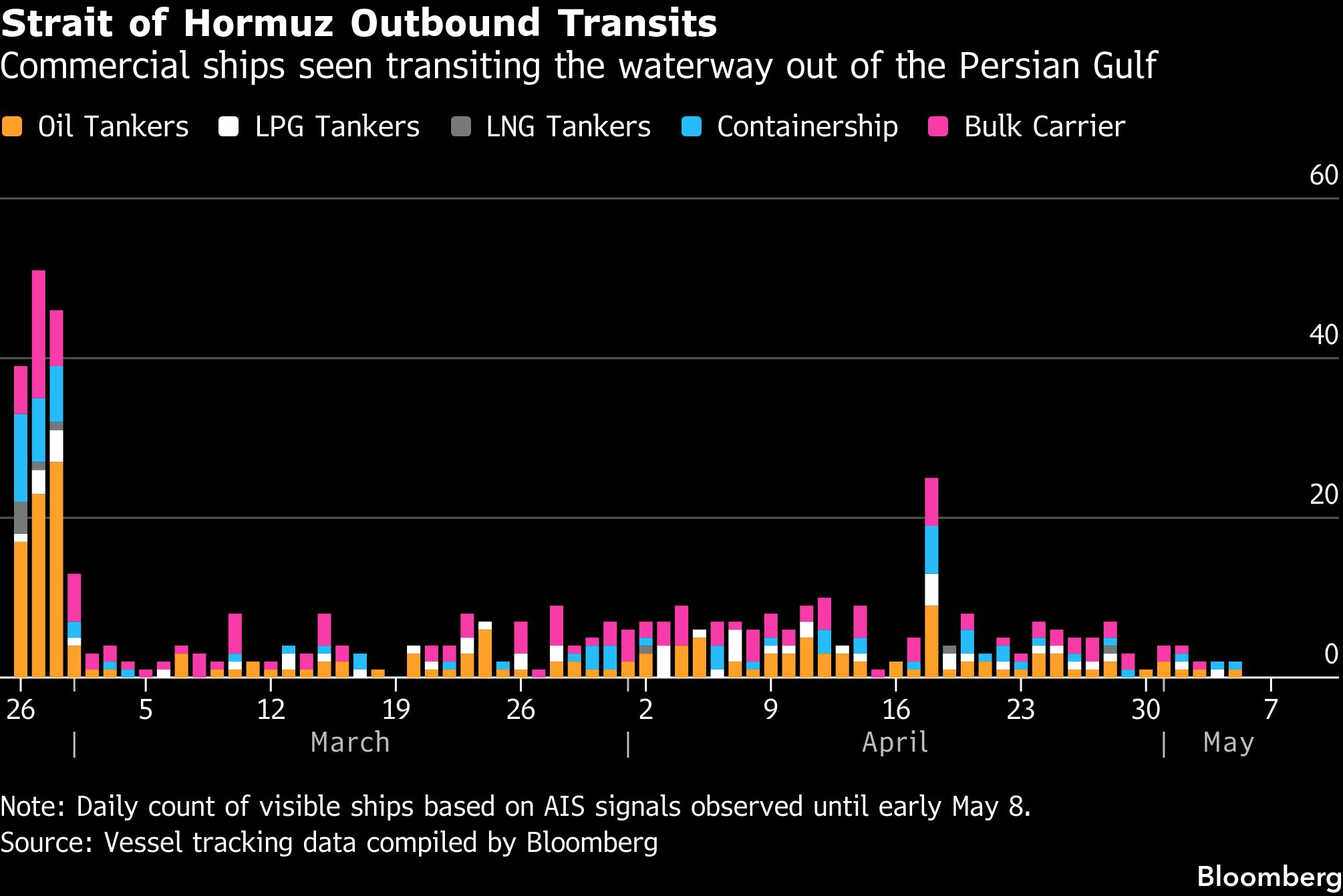
Tracking data currently shows no successful inbound crossings since fresh hostilities broke out on Monday.
The U.S. Central Command stated on the 1st that the U.S. military was preventing more than 70 oil tankers from entering and leaving Iranian ports. These tankers have a transport capacity of more than 166 million barrels of oil.
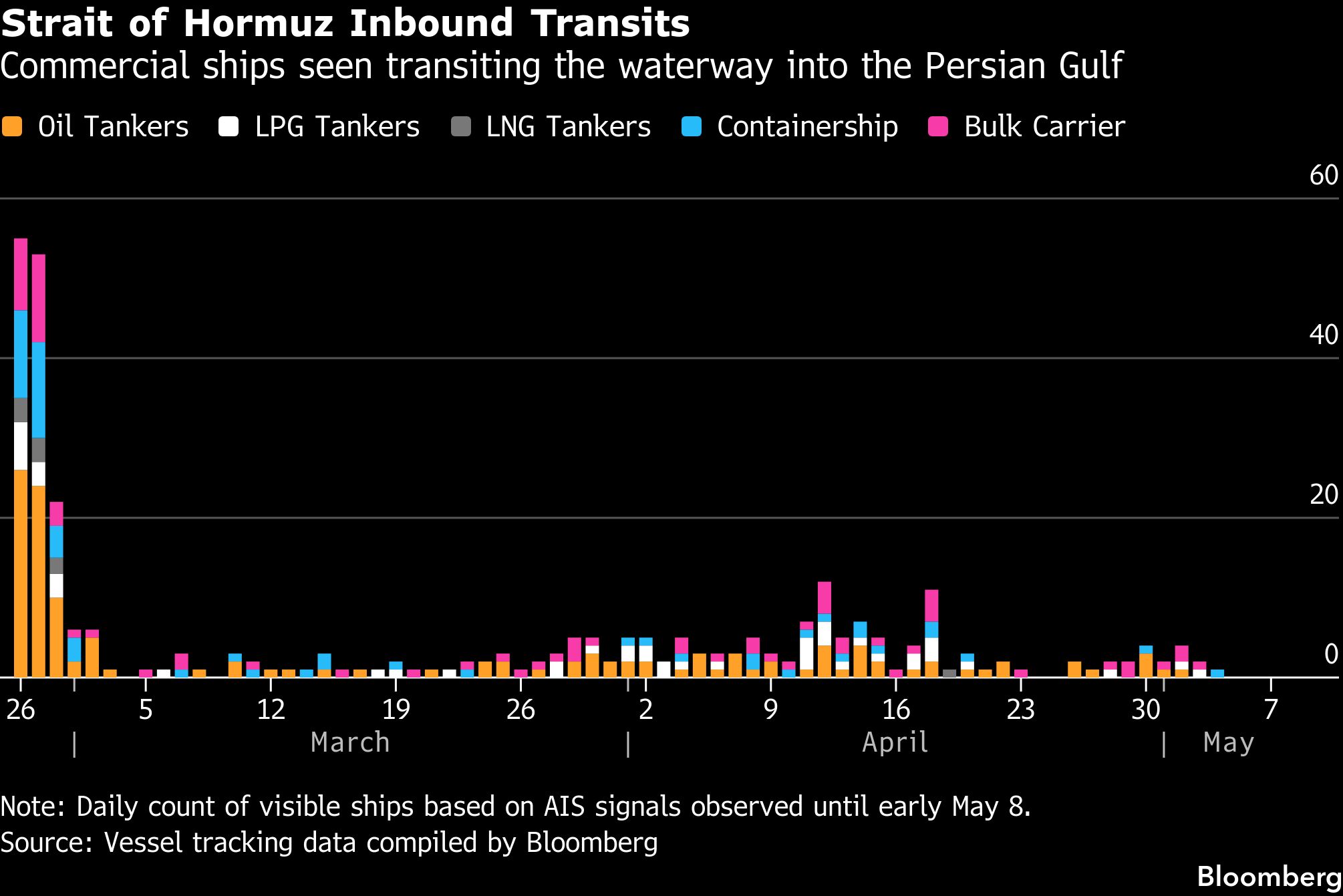
The presence of the U.S. Navy may also have distorted the picture. Iran-linked vessels moving in and out of the Gulf may turn off their AIS signals to avoid detection, making it more difficult to track traffic in real time. As a result, transit counts may be revised upward when vessels reappear away from high-risk waters.
Even before the U.S. banned entry and exit from Iranian ports, it was common for Iran-linked ships to approach the Strait of Hormuz. Signals often don’t recover until entering the Strait of Malacca – about a 13-day voyage from Iran’s Kharg Island.
notes:
Because ships can move without transmitting location information before moving away from Hormuz, automated positioning signals were programmed over a large area covering the Gulf of Oman, Arabian Sea and Red Sea to detect those ships that may be leaving or entering the Persian Gulf.
When a potential transit is identified, the system examines the signal history to determine whether the movement is real or the result of spoofing—where electronic interference could falsify a ship’s apparent position.
Some transits may go undetected if the vessel’s transponders are not turned back on. Oil tankers linked to Iran often depart from the Persian Gulf without broadcasting signals until they reach the Strait of Malacca about 10 days after passing through Fujairah in the United Arab Emirates. Other ships may employ similar tactics and not appear on the tracking screen for many days.
The tracker will be released during a period of heightened tensions involving Iran and is designed to capture traffic for all categories of commercial shipping.
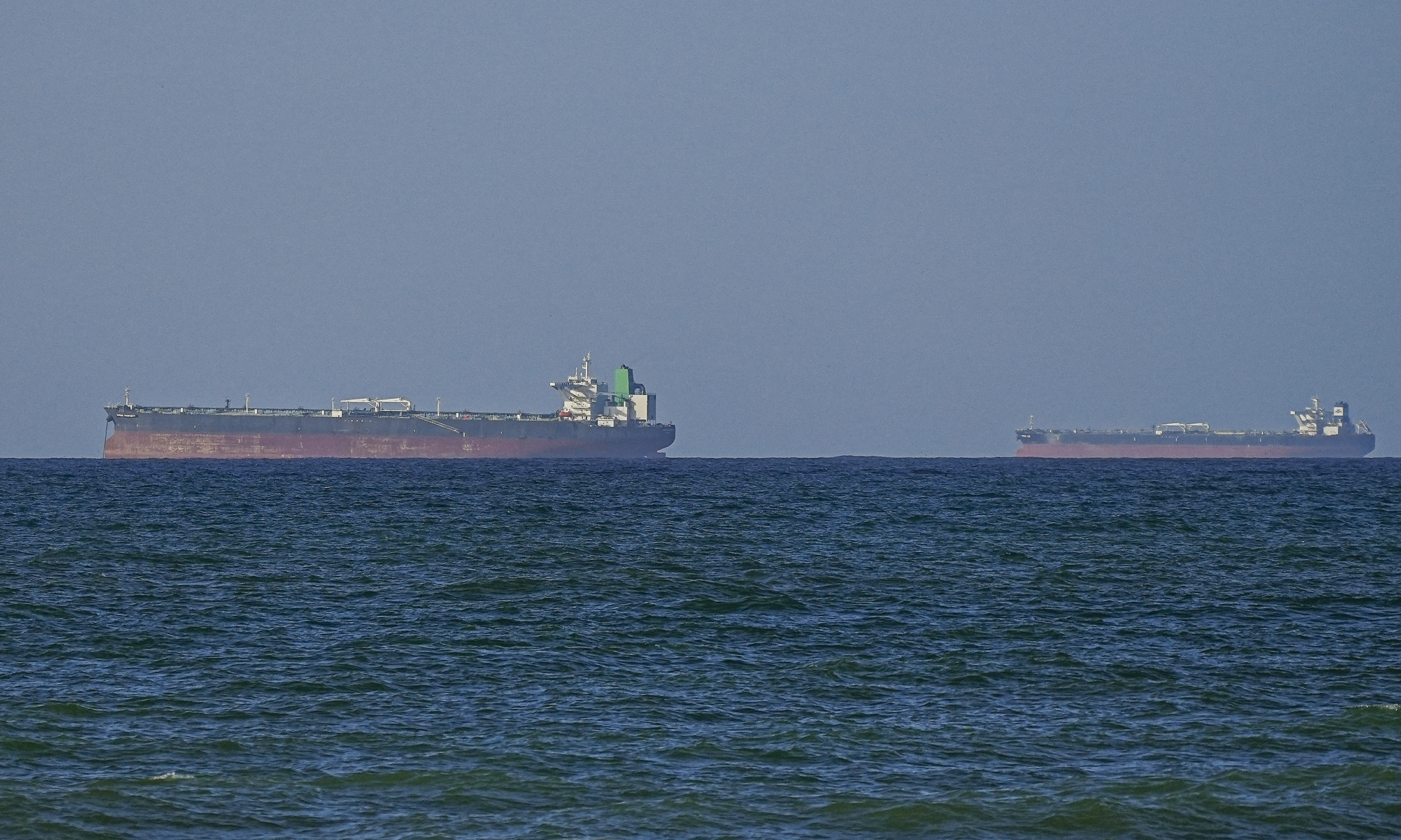
Photo: Ships passing through the Strait of Hormuz on April 8, 2026. Photo credit: Shadi JH Alassar/Anadolu/Getty Images
Related:
Copyright 2026 Bloomberg.
theme
USA
The most important insurance news, in your inbox every weekday.
Get the insurance industry’s trusted newsletter